
Fence Contractor in Holland, MI: Privacy vs. Open-Air Fence Design
A fence contractor in Holland, MI walks homeowners through two fundamentally different design goals before a single post goes into the ground. Hollandia Outdoors has designed and built fences across Holland, Grand Haven, Ada, and Cascade since 1965.
That experience shapes how the team walks homeowners through the privacy-versus-open-air decision early, since this single choice affects material options, cost, and how the finished fence actually functions on the property.
Homeowners sometimes assume this decision comes down to style preference alone. In practice, the yard's actual use, its relationship to neighbors, and even local ordinances all play a role in which design makes more sense.
Related: Designing a Backyard Escape: Landscaping for Relaxation in Cascade and West Olive, MI
What's the Difference Between a Privacy Fence and an Open-Air Fence?
A privacy fence uses solid panels or tightly spaced boards to block sightlines completely, screening a yard from neighbors, the street, or a nearby property. The goal is visual separation, creating an enclosed outdoor space that feels private regardless of what's happening beyond the fence line.
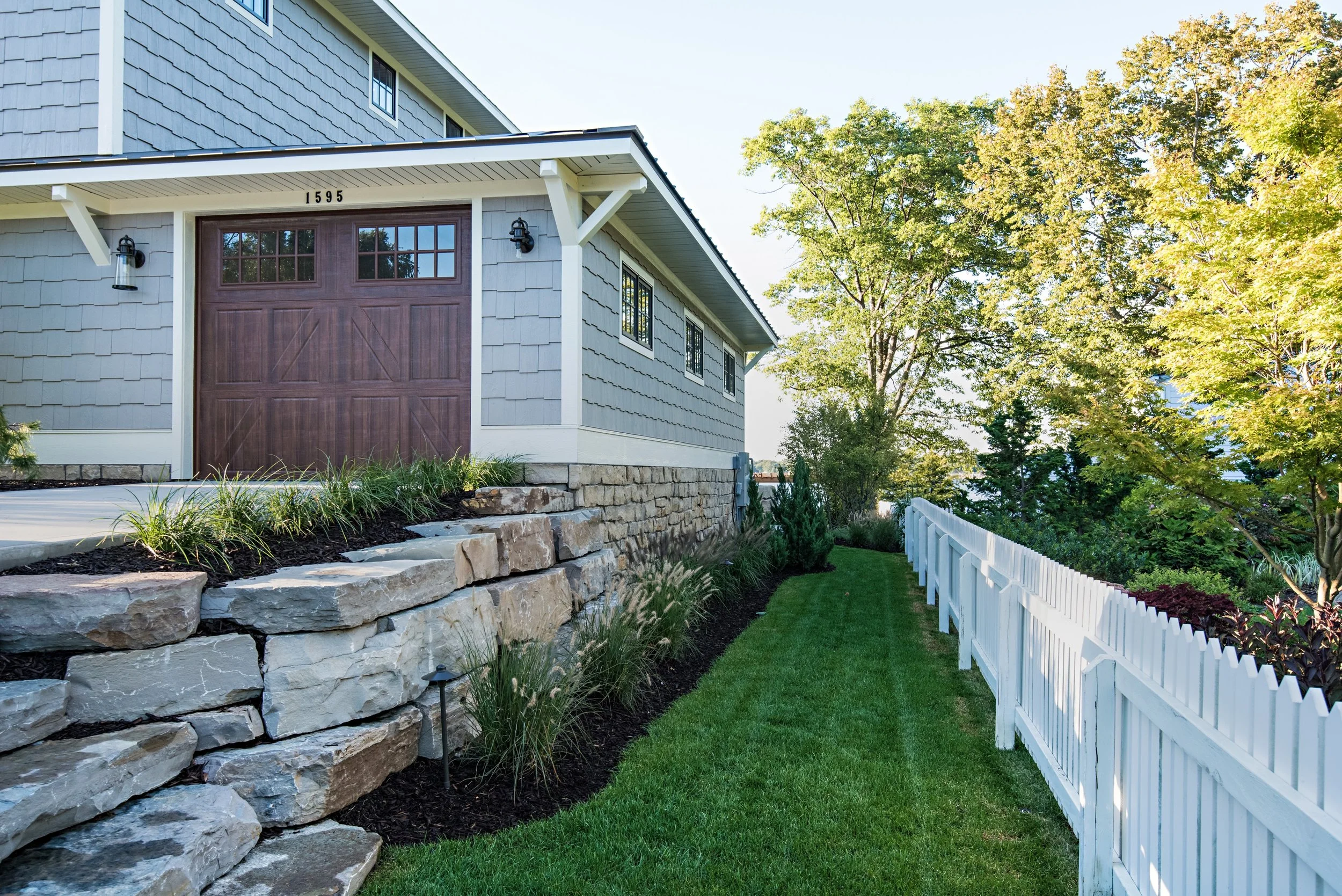
An open-air fence uses spaced pickets, ornamental metal, or other designs that mark a boundary without blocking the view through it. The goal here is definition rather than concealment, establishing where a property line sits while keeping sightlines and airflow open.
Some designs sit between these two categories, using semi-privacy spacing that reduces visibility without eliminating it entirely. A fence contractor walks through these in-between options for homeowners who want more separation than an open-air design offers without full privacy screening.
Neither category is inherently better, and the right choice depends entirely on what a homeowner is trying to accomplish with the fence in the first place.
Why This Decision Comes Early in the Process
Privacy and open-air designs use different construction methods, different material quantities, and sometimes different post spacing, which means this decision shapes the project's cost and timeline from the very first design conversation. Deciding on style after materials are already ordered creates delays and sometimes wasted material.
A homeowner who starts with a clear sense of the fence's purpose, whether that's blocking a neighbor's view or simply marking a property line, gives a fence contractor the information needed to recommend the right category from the first conversation.
This upfront clarity also affects the quote itself, since privacy fencing typically requires more material per linear foot than an open-air design, which shows up directly in the project's overall cost.
Homeowners comparing quotes from different fence contractors should confirm each quote assumes the same design category, since a lower bid sometimes reflects an open-air assumption when the homeowner actually wanted privacy screening.
Which Fence Materials Work Best for Privacy Designs?
Vinyl privacy fencing has become a popular choice because it holds up well against Michigan's moisture and temperature swings without the maintenance a wood fence requires. Solid vinyl panels come in a range of heights and styles while staying low-maintenance for decades after installation.
Natural wood privacy fencing offers a warmer, more traditional look and remains popular for homeowners who want that specific aesthetic. Wood requires more upkeep than vinyl, including periodic staining or sealing to protect against Michigan's humidity and freeze-thaw cycles.
Solid panel aluminum fencing exists as a privacy option as well, though it's less common than vinyl or wood for this specific use. It offers durability similar to open-air aluminum designs while still blocking sightlines through the panel construction.
Composite fencing, made from a blend of wood fiber and plastic, has also become an option for homeowners who want the appearance of wood without the same maintenance demands. It carries a higher upfront cost than vinyl but holds its color and finish longer than natural wood.
Matching Privacy Fence Height to the Goal
Full privacy screening typically requires a fence in the six-foot range, while a shorter privacy fence in the four-foot range provides some visual separation without fully blocking sightlines from a standing position. A fence contractor advises on local height restrictions before finalizing a design, since municipal codes often cap residential fence height.
Front yards in many Holland-area neighborhoods face stricter height limits than backyards, which sometimes rules out a full privacy design in that location regardless of a homeowner's preference.
Checking local ordinances before finalizing a design saves a homeowner from choosing a fence height and style during a consultation, only to find out later that a permit application requires a shorter or different design.
A fence contractor familiar with Holland and the surrounding townships already knows these local requirements and flags a potential conflict before a homeowner falls in love with a design that won't clear permitting.
Which Fence Materials Work Best for Open-Air Designs?
Aluminum open-air fencing offers a clean, modern look with minimal maintenance, making it a common choice for pool enclosures and front-yard boundaries where an open sightline matters. Powder-coated finishes resist rust and hold their color for years without repainting.
Chain link remains a practical, budget-friendly open-air option, particularly for larger properties, commercial sites, or areas where function matters more than appearance. Vinyl-coated chain link options soften the industrial look while keeping the same durability and low cost.
Wood picket fencing provides an open-air design with a more traditional, residential character than aluminum or chain link. Spaced pickets define a boundary clearly while still allowing visibility and airflow through the fence line.
Split rail fencing offers another open-air option for larger or more rural-feeling properties, marking a boundary with a rustic look that requires less material and installation time than a full picket design.
Ornamental Metal for a More Custom Look
Ornamental aluminum or steel fencing with decorative elements offers homeowners an upgraded open-air option for front yards, pool areas, or properties where curb appeal matters as much as boundary definition. These designs cost more than standard aluminum picket options but offer a more distinctive appearance.
Decorative post caps, scrollwork, or a two-tone finish turn a functional boundary into a feature that adds visual interest to the front of a property rather than simply marking where the yard ends.
Homeowners considering ornamental metal should ask a fence contractor about long-term maintenance for the specific finish chosen, since some decorative coatings require more upkeep than a standard powder-coated aluminum picket.
This style tends to suit properties where the fence itself functions as a visible design element, rather than a purely functional boundary tucked along a side or rear property line.
How Does Michigan's Climate Affect Fence Material Choice?
West Michigan's proximity to Lake Michigan brings specific climate factors into fence material decisions that inland regions don't need to consider as closely. Higher humidity affects wood's long-term performance, and salt air near the lakeshore accelerates corrosion on certain metal fasteners and hardware.
Sandy soil common near Lake Macatawa and throughout much of the Holland area also affects installation technique regardless of which material a homeowner chooses. Post holes set in sandy soil need different depth and setting methods than posts set in denser inland soil.
Properties closer to the immediate lakeshore experience these effects most intensely, while those further inland deal with a more moderate version of the same conditions.
Freeze-thaw cycling through Michigan winters puts stress on any fence material anchored below the frost line. A fence contractor familiar with local conditions sets posts below that frost line and accounts for the slight seasonal ground movement that comes with it.
Why Post Depth Matters More Than It Seems
Skipping this step, or setting posts at a shallower depth to save time, is one of the most common reasons a fence develops leaning posts or gaps within just a few years of installation.
A fence contractor with decades of experience in this specific region has already seen which shortcuts cause problems, which is the kind of knowledge that only comes from years of local installations rather than general fencing experience.
Asking a fence contractor directly how deep they set posts, and whether that depth changes based on soil type across a specific property, is a reasonable way to confirm this step is getting proper attention.
A contractor who answers with specific numbers, rather than a general assurance about quality work, is more likely to follow a consistent, documented process on every job.
Material Performance Through Michigan Winters
Vinyl and aluminum generally perform well through Michigan's winters with minimal seasonal maintenance. Wood fencing needs more attention to prevent moisture damage during freeze-thaw cycles specifically.
Chain link performs consistently regardless of season, though vinyl-coated versions resist the visual wear of repeated winters slightly better than bare galvanized options.
Homeowners choosing wood specifically for its appearance should plan for an annual inspection each spring, checking for loose boards or moisture damage that Michigan's winter freeze-thaw cycle tends to reveal first.
Catching these issues early, before a full season of additional wear, keeps a wood fence looking its best for years longer than one left unchecked between seasons.
Can a Property Use Both Privacy and Open-Air Fencing?
Many properties benefit from combining both approaches rather than choosing one design for the entire perimeter. A backyard facing a neighboring property often uses privacy fencing, while a front yard or side yard facing a street uses an open-air design that maintains curb appeal and visibility.
This combination approach works well for properties with different needs on different sides. A pool area often uses open-air aluminum fencing to meet safety code requirements while still allowing a clear view of the water.
The yard's rear boundary, meanwhile, uses privacy fencing to screen the pool from a neighboring home, giving each side of the property the design that actually fits its function.
A corner lot with street exposure on two sides presents a similar case, where an open-air design along both street-facing sides preserves curb appeal while a privacy section along the interior property line handles the actual separation from neighbors.
Planning a Mixed Design From the Start
A fence contractor should map out the full property perimeter during the initial consultation rather than designing each side independently. Transition points between privacy and open-air sections need thoughtful design to avoid looking disconnected.
Consistent post caps, color coordination, or a shared material family across both styles keeps a mixed design feeling intentional rather than like two unrelated projects stitched together.
Reviewing a full site plan before construction begins, rather than approving each section as a separate small project, gives a homeowner the clearest picture of how the finished property will look as one connected design.
This upfront planning also simplifies future additions, since a documented material plan gives a fence contractor a clear reference point if a homeowner extends or modifies the fence years down the road.
Choosing a Fence Contractor for Either Design
A fence contractor experienced with both privacy and open-air designs gives homeowners an honest comparison based on the property's actual layout and goals, rather than steering every project toward one style regardless of fit. That flexibility matters most for properties with varied needs across different sides of the yard.
Homeowners throughout Holland, Grand Haven, Ada, and Cascade benefit from a fence contractor who asks about the property's actual use, whether that's privacy from a close neighbor, safety around a pool, or simple boundary definition, before recommending a specific design.
That upfront conversation, informed by decades of local experience with West Michigan's soil and climate conditions, results in a fence built to last rather than one chosen from a catalog without regard for how the property actually functions.
Schedule a fence contractor consultation with Hollandia Outdoors to compare privacy and open-air options for your specific property before you decide.
In Summary
What is the difference between a privacy fence and an open-air fence?
A privacy fence uses solid panels or tightly spaced boards to block sightlines completely, while an open-air fence uses spaced pickets or ornamental metal that marks a boundary without blocking the view through it. Semi-privacy designs sit between the two, reducing visibility without eliminating it. The right choice depends on whether the goal is concealment or simple boundary definition.
Which fence materials hold up best in West Michigan's climate?
Vinyl and aluminum generally perform well through Michigan winters with minimal seasonal maintenance, while wood needs more attention to prevent moisture damage during freeze-thaw cycles. Properties near Lake Michigan face added factors like salt air corrosion on metal hardware and sandy soil that changes post-setting depth. A fence contractor familiar with the local conditions adjusts material and installation choices accordingly.
Can a single property use both privacy and open-air fencing?
Many properties combine both, using privacy fencing along a backyard that faces a neighbor and open-air fencing along a front or side yard that faces the street. Pool areas often pair open-air aluminum for code compliance with a privacy section screening the pool from neighboring homes. Mapping the full perimeter during the initial consultation keeps the transition between styles feeling intentional rather than disconnected.
How does fence height affect a privacy design in Holland, MI?
Full privacy screening typically calls for a fence in the six-foot range, while a four-foot fence offers some separation without fully blocking sightlines from a standing position. Front yards in many Holland-area neighborhoods carry stricter height limits than backyards, which sometimes rules out a full privacy design there. Checking local ordinances before finalizing a design avoids choosing a style that won't clear permitting.
Why does post depth matter for fence longevity?
Posts set below Michigan's frost line account for seasonal ground movement, while posts set at a shallower depth to save time are one of the most common reasons a fence develops leaning posts or gaps within a few years. Sandy soil common near Lake Macatawa also changes the depth and setting method a post needs regardless of material. Asking a contractor for specific post-depth numbers, rather than a general assurance, is a reasonable way to confirm the work gets done right.
Related: Contemporary Landscape Design Features for Stylish Living in Grand Haven and East Grand Rapids, MI
ABOUT THE AUTHOR
As a faith-based, veteran-owned company, we are passionate about creating beautiful outdoor spaces where our customers can retreat to find peace and connection with friends, family, and God. With nearly six decades in business, we are known as the premier lawn and landscape contractor in West Michigan. Using only premium materials, our artisans built a stunning poolscape oasis where our happy customer now spends her sacred Sundays enjoying the tranquility and beauty of nature.