
Why Drainage Is Now One of the Most Requested Landscape Upgrades in Grand Rapids Charter Township & Plainfield Charter Township, MI

In today’s most refined outdoor environments, beauty alone is no longer enough. Performance matters. Longevity matters. And increasingly, water management matters more than ever. That’s why drainage in Grand Rapids Charter Township, Mi and Plainfield Charter Township, MI, has become one of the most searched and requested landscape upgrades among discerning homeowners.
Across West Michigan, we’re seeing a shift in priorities. Homeowners investing in sophisticated outdoor living space—custom patios, pools, outdoor kitchens, structured plantings—are realizing that none of it thrives without a properly engineered foundation beneath the surface. Drainage isn’t glamorous. It doesn’t sparkle like a fire feature or steal the show like a pavilion. But it quietly protects every investment you make outdoors.
At Hollandia Outdoors, our landscapers and drainage experts approach drainage not as an add-on, but as a core design discipline—one that blends engineering, aesthetics, and long-term property maintenance into a seamless experience. And in communities like Grand Rapids Charter Township and Plainfield Charter Township, demand has never been higher.
Let’s talk about why.
Related: Drainage That Protects and Beautifies Holland, MI, & Port Sheldon, MI, Properties
A Perfect Storm: Weather, Development, and Expectations
West Michigan’s climate has always been dynamic, but recent years have brought more frequent heavy rain events, rapid snowmelt cycles, and unpredictable freeze-thaw patterns. Combine that with expanding development, denser neighborhoods, and larger custom homes—and suddenly, water has fewer places to go.
Clay-heavy soils common in Kent County don’t absorb water easily. Grading challenges on newer lots often push runoff toward foundations. Mature trees, while beautiful, can disrupt natural drainage paths over time. And as properties evolve—adding patios, driveways, pools, and outdoor structures—natural water flow changes.
The result? More homeowners are noticing issues they can’t ignore.
Lawns that never fully dry
Water pooling near foundations
Mulch washing out after storms
Plantings that struggle despite expert care
Outdoor living spaces that feel damp or unusable
These aren’t cosmetic concerns. They’re signs that a property needs a custom drainage system designed with intention.
Drainage Is No Longer a “Fix”—It’s a Design Strategy
The most successful outdoor environments today don’t treat drainage as a reaction to problems—they treat it as a foundational design element. In high-caliber landscape design, drainage is planned from the very beginning, woven into the architecture of the property just as intentionally as patios, plantings, and outdoor structures.
Our experts don’t simply move water away from your home. We direct it with purpose—quietly, efficiently, and invisibly—so it supports the beauty and performance of your landscape rather than working against it. When done correctly, drainage disappears into the design, doing its job behind the scenes while everything above ground looks effortless.
Modern drainage systems are engineered to work in harmony with every layer of your outdoor environment and include:
Hardscape layouts
Hardscape layouts are designed with subtle pitch, joint spacing, and base preparation that encourage water to flow naturally—protecting patios, walkways, driveways, and pool surrounds from shifting, staining, or premature wear. Rather than interrupting the visual flow of your outdoor living space, drainage becomes part of its structure.
Planting design
Planting design plays a critical role as well. Our landscapers carefully evaluate soil moisture levels, root zones, and plant tolerance to ensure that water-loving species thrive where appropriate, while sensitive plantings are protected from oversaturation. This allows landscapes to mature beautifully instead of constantly fighting uphill battles against water stress.
Grading and elevation
Grading and elevation are where drainage strategy truly begins. Even slight changes in slope can dramatically influence how water behaves across your property. In West Michigan’s clay-heavy soils, precision grading is essential. Our experts shape the land to guide water naturally—away from foundations and toward designated drainage paths—without creating harsh transitions or visual disruption.
Irrigation systems
Irrigation systems are also closely coordinated with drainage design. Watering should nourish your landscape, not compete with it. By aligning irrigation zones with drainage patterns, we prevent overwatering, pooling, and runoff, creating a balanced system that supports long-term plant health while conserving resources.
Foundation protection
Foundation protection remains one of the most important objectives of any drainage strategy. By controlling roof runoff, subsurface water, and surface flow, we reduce hydrostatic pressure near your home—helping safeguard structural integrity while maintaining a clean, polished appearance around the perimeter.
Big picture property care
And finally, everything ties back to long-term property maintenance. Landscapes designed with proper drainage require less correction, fewer repairs, and far less ongoing intervention. Turf stays healthier. Beds stay intact. Hardscapes remain level and refined. Your outdoor living space performs as beautifully years from now as it does the day it’s completed.
In Grand Rapids Charter Township and Plainfield Charter Township, we’re seeing a growing number of homeowners request drainage upgrades before visible problems ever appear. This proactive approach reflects a deeper understanding of what truly protects a high-value property.
Thoughtful drainage planning preserves the longevity of luxury materials, enhances everyday comfort, and ensures that outdoor spaces remain enjoyable in every season.
This isn’t about fixing what’s broken. It’s about designing outdoor spaces that work—quietly, intelligently, and flawlessly—from the ground up.
What Is the Main Purpose of Residential Drainage?
At its core, residential drainage exists to control where water goes—and just as importantly, where it doesn’t.
Our drainage systems are designed to:
Move excess surface and subsurface water away from your home
Prevent erosion and soil displacement
Protect foundations and hardscapes
Preserve turf health and plant vitality
Keep outdoor living spaces dry, usable, and comfortable
In West Michigan’s climate, effective drainage must handle:
Heavy spring rains
Rapid snowmelt
Saturated soils
Seasonal freeze-thaw cycles
A properly designed system doesn’t just solve today’s problem—it anticipates tomorrow’s conditions.
Who Is Responsible for Drainage?
This is one of the most misunderstood aspects of residential drainage.
While municipalities manage public stormwater infrastructure, you are responsible for how water behaves on your property. That includes runoff from your roof, yard, driveway, patios, and landscaped areas.
In neighborhoods throughout Grand Rapids Charter Township and Plainfield Charter Township, changes in surrounding development can also alter how water flows onto your land. Even if you didn’t create the issue, managing it becomes essential to protect your home and landscape.
That’s where our experts step in. We evaluate:
Existing grading and elevations
Soil composition and compaction
Roof runoff patterns
Downspout discharge locations
Hardscape and planting layouts
Natural water flow paths
From there, we design a custom drainage system that works within your property—not against it.
Drainage as a Luxury Upgrade (Yes, Really)
Luxury isn’t just about how a landscape looks—it’s about how it performs without effort. When drainage is designed and executed properly, everything above it works better.
Lawns dry evenly after storms instead of remaining patchy or saturated. Patios stay clean, level, and consistently usable rather than collecting water or debris. Plantings flourish because roots receive the oxygen they need, allowing curated landscapes to thrive rather than struggle against excess moisture.
Perhaps most importantly, your outdoor living space feels intentional and refined. There’s a sense of balance and polish when water is quietly managed behind the scenes—nothing distracts from the experience of being outside, and nothing feels compromised by conditions you can’t see.
Our clients don’t request drainage upgrades because they’re reacting to failure or damage. They request them because they expect excellence. They want landscapes that function as beautifully as they look, season after season, with no weak links beneath the surface. And frankly? That’s exactly where drainage shines.
What Are Common Drainage Problems?
In our years serving West Michigan homeowners, we see patterns emerge. Some issues are obvious. Others are subtle—but equally damaging over time.
Common drainage problems include:
Persistent Standing Water
Low areas that remain wet days after rainfall often indicate poor grading or inadequate subsurface drainage.
Foundation Saturation
Water collecting near foundations can lead to moisture intrusion, cracking, and long-term structural concerns.
Erosion and Washouts
Heavy rain can displace soil, mulch, and even hardscape edging when water isn’t properly managed.
Plant Decline
Over-saturated roots deprive plants of oxygen, leading to poor growth or failure—even in professionally designed beds.
Hardscape Damage
Freeze-thaw cycles combined with trapped moisture can shift pavers, crack concrete, and compromise structural integrity.
Each of these issues points back to one thing: water moving where it shouldn’t.
Related: 5 Ways Professional Drainage in Holland, MI & West Olive, MI Preserves Outdoor Spaces
What Are the Effects of a Dysfunctional Drainage System?
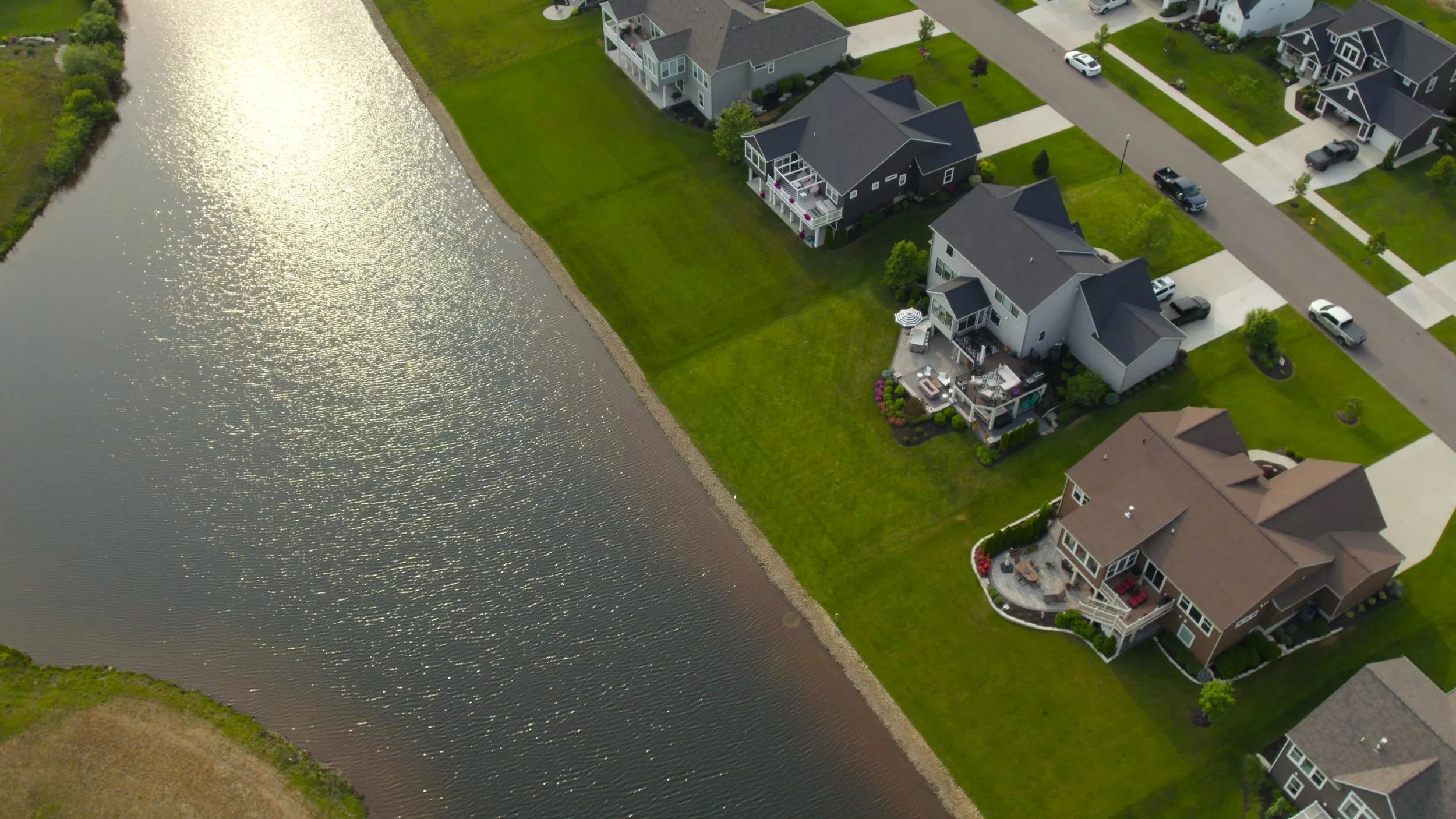
A failing or outdated drainage system doesn’t simply cause minor inconveniences. It quietly erodes the value and performance of your entire landscape investment. Because drainage issues often develop below the surface, their impact can go unnoticed—until the effects begin to show in places you can’t ignore.
Accelerated Wear on Hardscapes and Structural Elements
One of the first signs of drainage failure is accelerated wear on patios, walkways, and retaining walls. When excess moisture lingers beneath hardscapes, it compromises base materials and structural support.
Over time, this can lead to shifting, settling, or cracking—especially in West Michigan’s freeze-thaw cycles—undermining both appearance and longevity.
Increased Maintenance and Recurring Repairs
As water continues to behave unpredictably, maintenance demands increase. Lawns require more attention, beds need frequent repair, and hardscape adjustments become recurring rather than occasional.
What should be a refined, low-friction outdoor environment begins to feel like a constant work in progress, with repairs addressing symptoms rather than the underlying cause.
Reduced Usability of Outdoor Living Space
A dysfunctional drainage system also reduces the usability of your outdoor living space. Patios stay damp longer than they should. Certain areas feel perpetually soggy or off-limits after rainfall.
Instead of enjoying your outdoor spaces whenever the moment strikes, you’re forced to work around conditions—something no thoughtfully designed landscape should require.
Ongoing Turf and Planting Replacement
Over time, turf and planting replacement becomes an ongoing cycle. Even the best-designed landscapes struggle when roots are deprived of oxygen or subjected to prolonged saturation.
Lawns thin out, plantings decline, and carefully curated beds lose their vitality—not because of poor design, but because water is working against them.
Long-Term Risk to Your Home’s Foundation
Perhaps most concerning is the long-term risk to your home’s foundation. Excess water near foundations increases hydrostatic pressure, which can lead to moisture intrusion, structural stress, and costly corrective work down the road. These issues may develop slowly, but they are cumulative—and far easier to prevent than to repair.
Many homeowners don’t realize drainage is the root issue until visible damage has already occurred. That’s why our approach emphasizes early intervention and integrated design—solving problems before they escalate, protecting your investment, and ensuring your outdoor spaces continue to perform beautifully for years to come.
How Long Do Yard Drains Last?
When professionally designed and installed using quality materials, yard drainage systems are built for longevity.
In West Michigan conditions, well-engineered systems commonly last several decades, especially when:
Proper materials are selected for soil conditions
Installation accounts for freeze-thaw cycles
Systems are integrated with grading and landscaping
Periodic inspections are part of property maintenance
Drainage isn’t something you should be revisiting every few years. Done correctly, it becomes an invisible workhorse—quietly protecting your property season after season.
Timing Matters: When Drainage Work Is Most Effective
In Grand Rapids Charter Township and Plainfield Charter Township, drainage installation is typically most effective from late spring through fall, when soil conditions allow for precision work and proper settling.
However, planning starts much earlier.
Many of our clients engage us:
During landscape design planning
Ahead of outdoor living renovations
Before new construction landscaping begins
By integrating drainage early, we ensure that patios, pools, plantings, and structures are supported—not compromised—by water flow.
Drainage and Landscape Design: Better Together
Drainage should never feel like an afterthought. Our landscapers design systems that are:
Discreet and visually unobtrusive
Compatible with high-end materials
Integrated into planting beds and hardscapes
Tailored to your property’s unique topography
This is where landscape design and engineering intersect, and where true craftsmanship shows.
When drainage is designed alongside your outdoor living space, everything works better—and looks better.
Why Homeowners Trust Hollandia Outdoors
At Hollandia Outdoors, drainage is part of our holistic approach to outdoor environments. We don’t treat it as a standalone service. We treat it as a critical layer of design excellence.
Our experts bring:
Deep knowledge of West Michigan soils and climate
Experience with complex residential properties
In-house design and construction coordination
A commitment to long-term performance
A reputation for exceptional, reliable service
From concept to completion, our team manages every detail—so you can enjoy your landscape with confidence.
For homeowners in Grand Rapids Charter Township and Plainfield Charter Township, that confidence is everything.
The Bottom Line: Drainage Is the Quiet Upgrade That Changes Everything
You don’t see great drainage. You feel it.
You feel it when your lawn recovers quickly after a storm. When your patio stays clean and level. When your plantings thrive effortlessly. When your outdoor living space performs exactly as it should.
That’s why drainage has become one of the most requested upgrades among homeowners who expect more from their landscapes.
And once it’s done right, you’ll wonder how you ever lived without it.
Schedule a drainage design consultation today with our experts at Hollandia Outdoor Living Concepts to explore how our experts design and integrate custom drainage systems as part of a complete outdoor experience.
Related: Tackle Erosion with Landscape Design: Beautiful Terracing Solutions in Grand Haven MI
ABOUT THE AUTHOR
As a faith-based, veteran-owned company, we are passionate about creating beautiful outdoor spaces where our customers can retreat to find peace and connection with friends, family, and God. With nearly six decades in business, we are known as the premier lawn and landscape contractor in West Michigan. Using only premium materials, our artisans built a stunning poolscape oasis where our happy customer now spends her sacred Sundays enjoying the tranquility and beauty of nature.